
ติดโซลาร์แล้ว Demand Charge ยังสูง ควรถามอะไรต่อ?
📸ภาพประกอบและแผนผังระบบ (5 สไลด์)
💡 คลิกที่ภาพเพื่อเปิดโหมดขยายเต็มจอ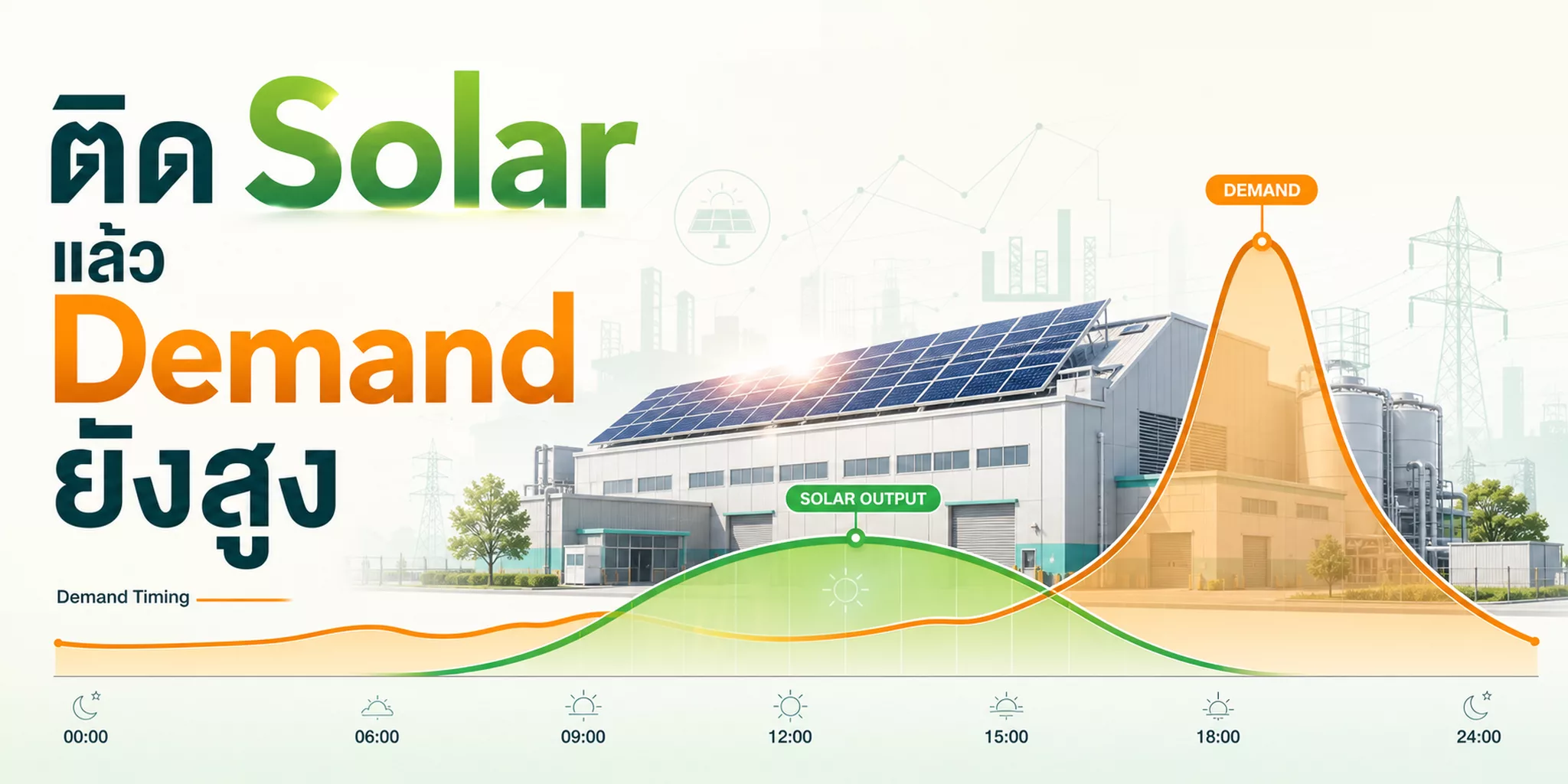
ดูว่าโหลดสูงสุดเกิดเมื่อไร โซลาร์ผลิตไฟเท่าไรในช่วงนั้น และอุปกรณ์อะไรทำงานพร้อมกัน เพื่อวิเคราะห์ค่าไฟให้ครบภาพ
ถ้า Demand Charge ยังสูง แม้ติด Solar แล้ว คำถามต่อไปไม่ใช่ Solar เสียหรือเปล่า แต่อยู่ที่ peak เกิดตอนไหน
1. ปัญหาและข้อจำกัดหน้างาน (Operational Challenge)
หลายองค์กรคาดหวังว่าเมื่อติด Solar Rooftop แล้ว ค่าไฟจะลดลงทุกมิติ แต่ในความจริง Solar ช่วยได้มากในด้านพลังงานที่ผลิตระหว่างวัน ส่วน Demand Charge ยังขึ้นกับช่วงเวลาที่โหลดของอาคารหรือโรงงานพุ่งสูงสุด
- Peak demand เกิดวันที่และเวลาใด
- ตอนนั้น Solar ผลิตได้เท่าไร เทียบกับโหลดรวม
- โหลดหลักตัวใด start หรือขึ้นโหลดพร้อมกัน
- มี schedule หรือ operating mode ที่ทำให้โหลดซ้อนกันหรือไม่
- มีวิธีทยอย start หรือเลื่อนโหลดบางส่วนได้หรือไม่
2. แนวทางแก้ไขเชิงวิศวกรรม (Engineering Solution)
ถ้า peak demand เกิดตอนโหลดหลักทำงานพร้อมกัน เช่น chiller, compressor, pump, production line หรือเกิดในช่วงที่ Solar ผลิตไม่พอ เช่น เมฆบัง, ช่วงเย็น, หลัง restart ระบบ หรือช่วงเริ่ม production พร้อมกัน Demand Charge ก็ยังสูงได้
สำหรับผู้บริหาร คำถามสำคัญจึงไม่ใช่แค่ “Solar ผลิตได้เท่าไร” แต่ต้องถามว่า “ตอน demand peak เกิดขึ้น Solar ช่วยได้แค่ไหน และโหลดอะไรขึ้นพร้อมกัน”
คำถามที่ควรถามทีมงาน
เมื่อมีข้อมูล demand, solar output และ load timeline อยู่ในภาพเดียวกัน ทีมจะเห็นแนวทางปรับ operation ได้ชัดขึ้น เช่น ลดการ start พร้อมกัน, ปรับ schedule โหลดบางกลุ่ม หรือทำ alarm แจ้งเตือนก่อนเข้าใกล้ demand threshold
✓ ข้อแนะนำและสิ่งที่ควรเริ่มตรวจเช็ก
If demand charge remains high after installing solar rooftop, the next question should not be only whether solar is underperforming. The first question should be: when did the peak occur?
Solar can reduce daytime energy import, but demand charge is driven by the highest load window. If that peak happens when major loads start together, when production ramps up, during a cloudy period, after a restart, or later in the day, solar output may not fully reduce the demand event.
For executives, the key view is a timeline that combines demand profile, solar output, and major load operation. It should answer: when did the peak happen, how much solar was available, which loads overlapped, and whether the operating schedule can be adjusted.
This turns the conversation from “Is solar working?” into “How do we coordinate loads better?”
The value is not just monitoring solar. It is connecting solar performance with demand management and operational decisions.
#DemandManagement #SolarRooftop #EnergyVisibility #FactoryEnergy
บทความและกรณีศึกษาที่เกี่ยวข้อง
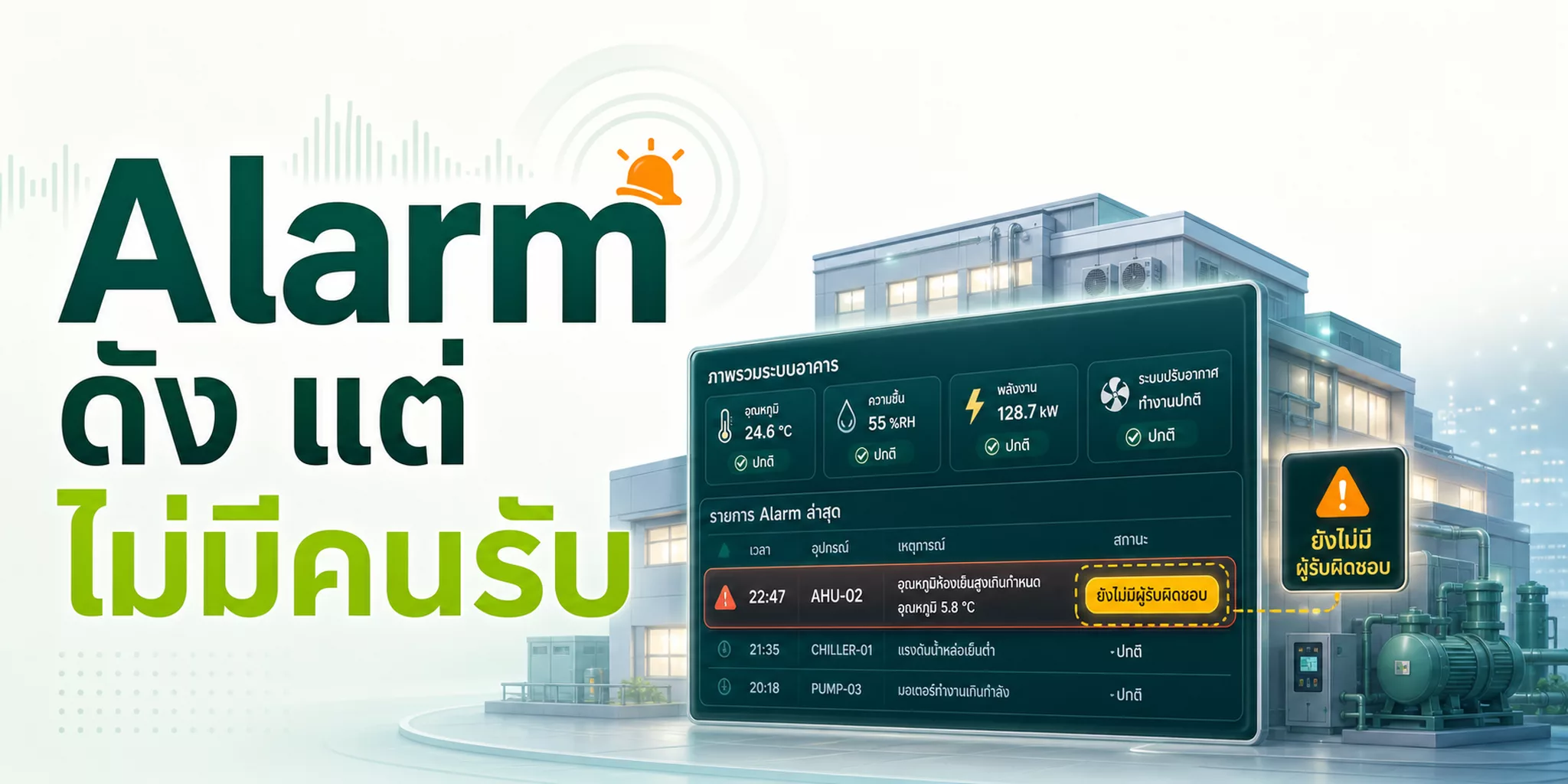
แจ้งเตือนกลางคืน ใครรับเรื่อง ใครตามจนจบ?
การแจ้งเตือนจะช่วยแก้ปัญหาได้ เมื่อมีผู้รับเรื่องชัดเจนและติดตามจนปิดงาน มาดูวิธีจัดการเหตุช่วงกลางคืนให้ทีมเช้ารับช่วงต…
อ่านต่อ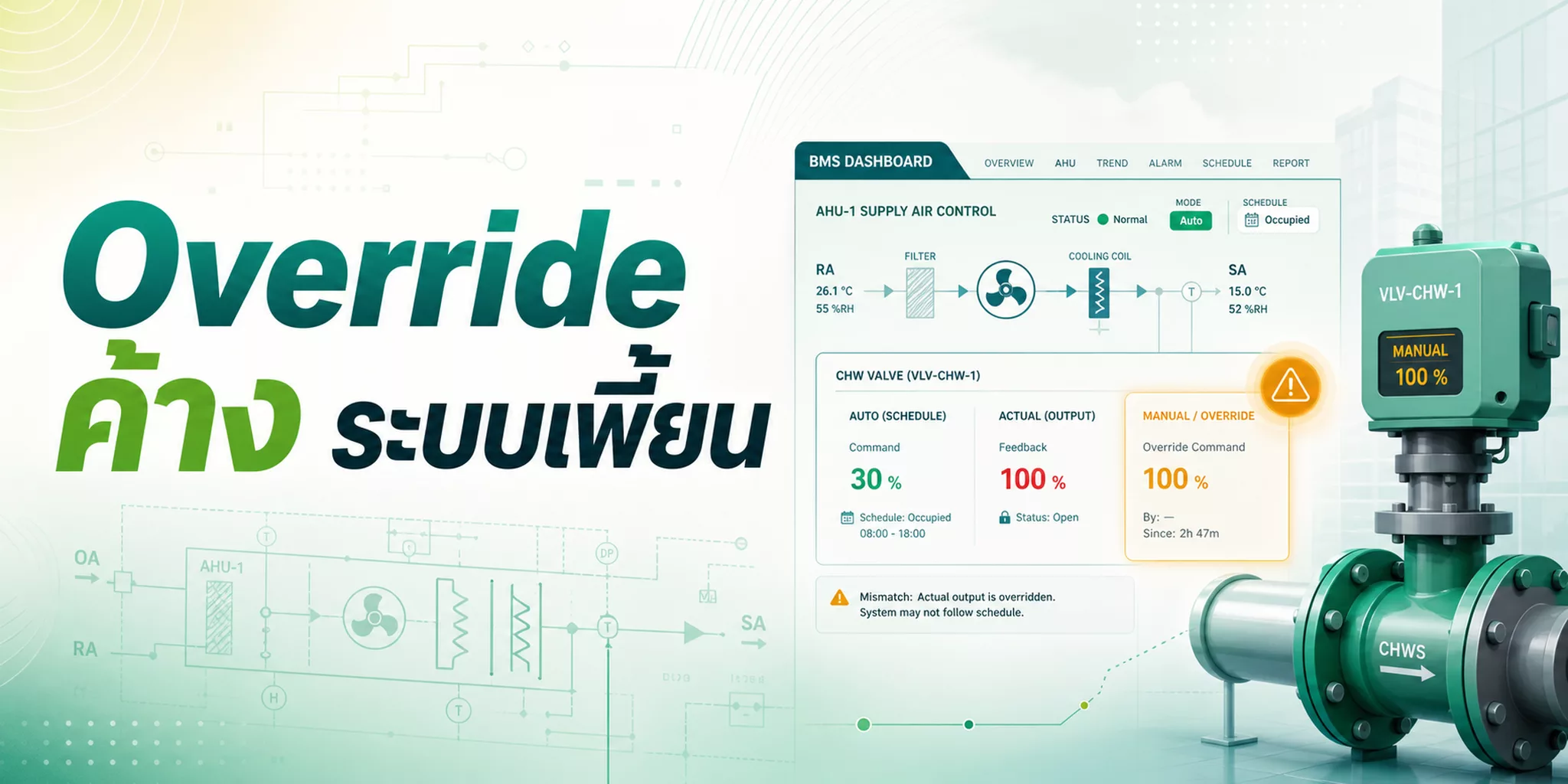
ตั้ง Manual Override แล้วลืมคืนค่า BMS อาจทำงานผิดแผน
การสั่งอุปกรณ์ด้วยมือช่วยแก้ปัญหาเฉพาะหน้า แต่หากค้างไว้ ตารางและเงื่อนไขควบคุมอาจไม่ได้ทำงานอย่างที่ทีมเข้าใจ
อ่านต่อ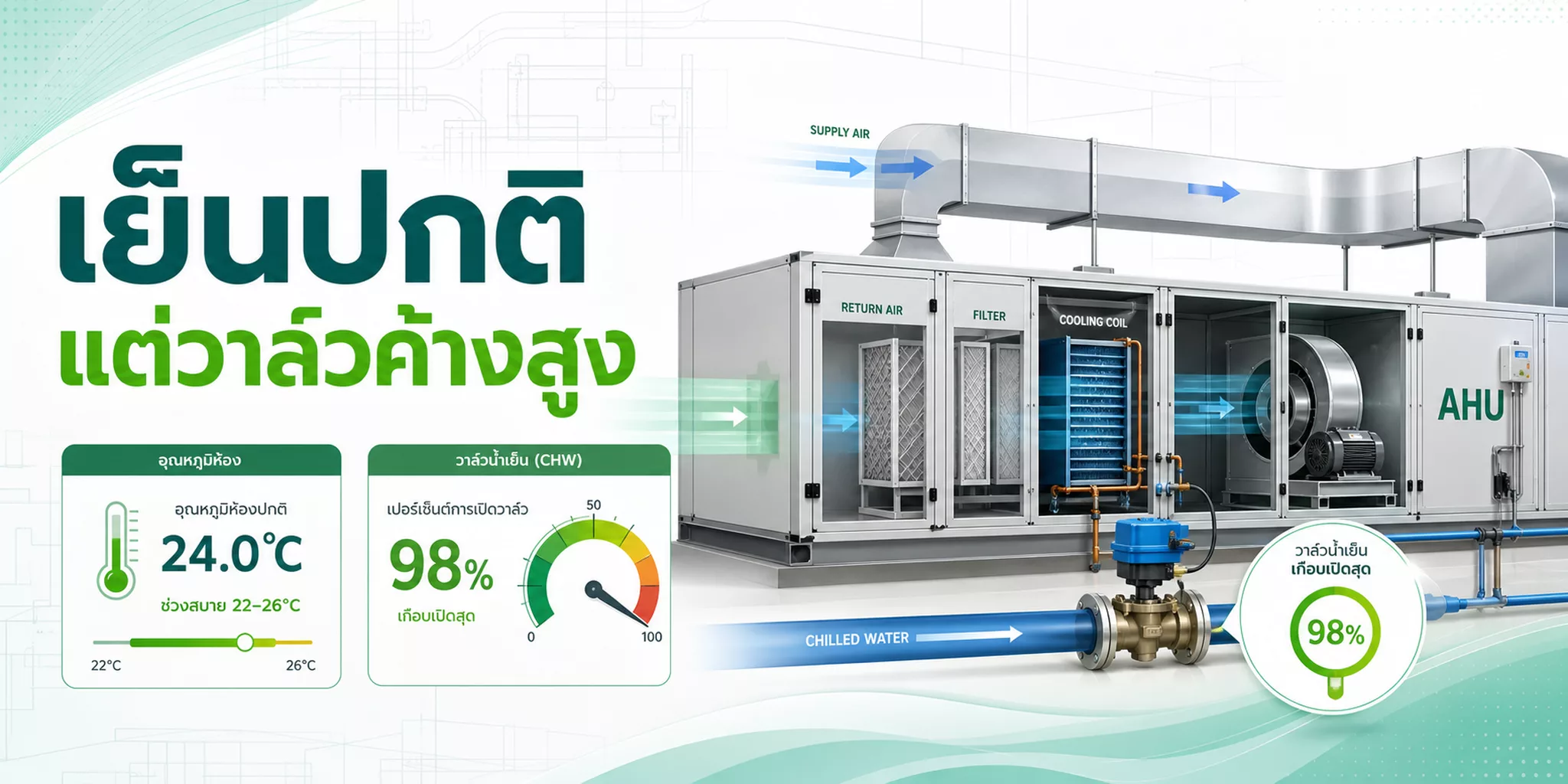
ห้องยังเย็น แต่วาล์วเปิดเกือบ 100% ควรตรวจอะไร?
อุณหภูมิที่อยู่ในเกณฑ์อาจซ่อนภาระการทำงานที่สูงผิดปกติ ลองดูอุณหภูมิคู่กับตำแหน่งวาล์ว เพื่อหาเหตุที่ระบบต้องเร่งทำงานตล…
อ่านต่อ